Updating your shower is one of the most impactful decisions you can make during a bathroom renovation. Choosing between acrylic shower walls vs tile often comes down to balancing your personal style, available budget, and how much time you want to spend scrubbing grout. Both options offer distinct benefits depending on your priorities.
This comprehensive remodeling guide breaks down everything you need to know about acrylic panels and traditional tile. From upfront costs and installation timelines to long-term durability and maintenance, we will help you make an informed decision that suits your home and lifestyle.
Understanding Acrylic Shower Walls and Tile Options
What Are Acrylic Shower Panels and Wall Surrounds?
Acrylic shower walls are large, solid sheets manufactured from durable vacuum-formed plastic reinforced with fiberglass. These panels are engineered to fit snugly over your shower space, creating a sleek, virtually seamless moisture barrier. They can be manufactured as single solid pieces or multi-panel kit systems designed to snap together securely during installation.
Modern acrylic shower panels have come a long way from the basic plastic surrounds of the past. Today, they feature realistic high-definition patterns that emulate natural stone, marble, or subway tile, offering an elevated look without the hassle of individual tile pieces.
The Classic Appeal of Tile Showers (Ceramic, Porcelain, & Stone)
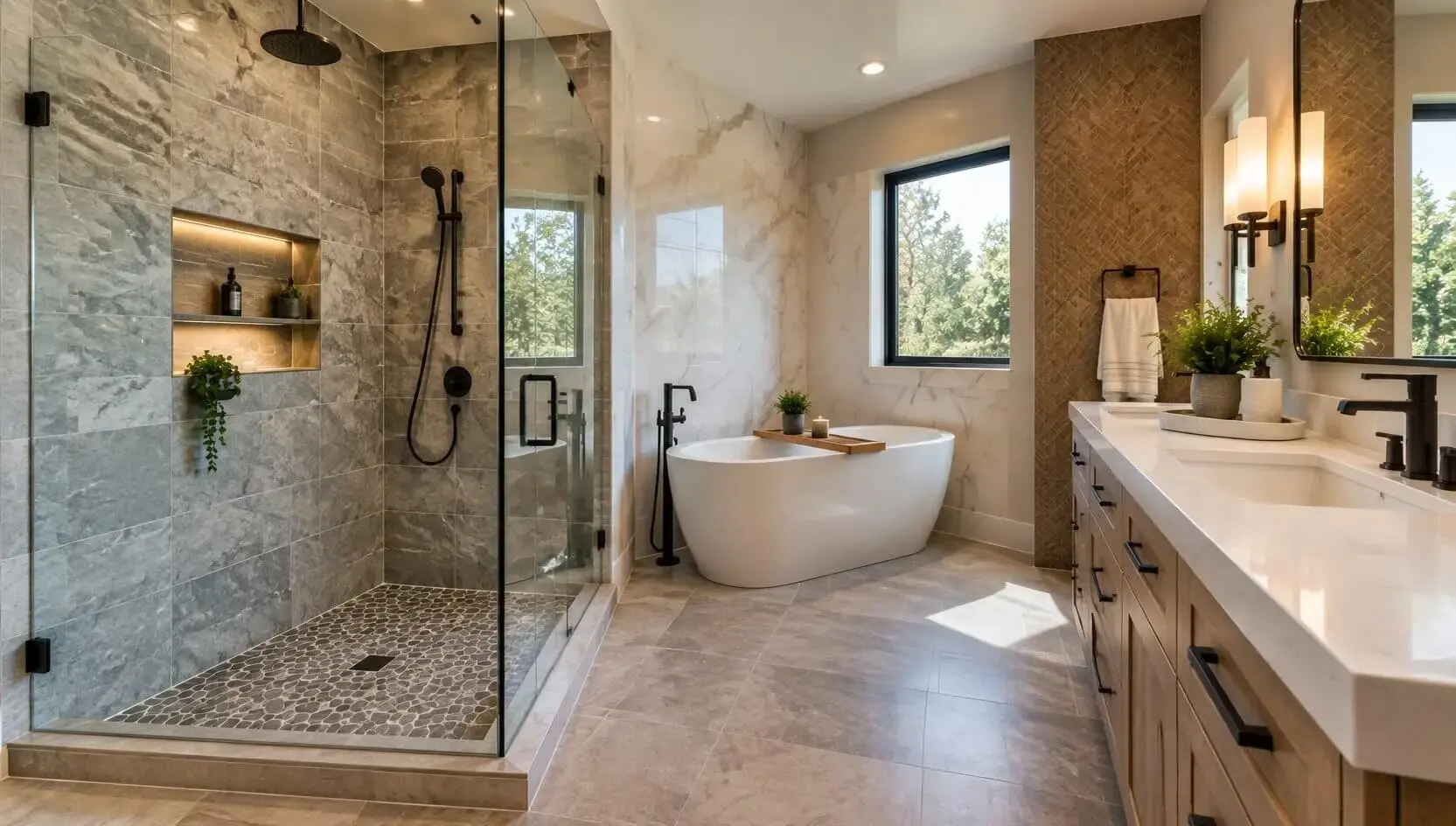
Tile has long been the gold standard for luxury bathroom designs due to its timeless aesthetic and endless customization options. Homeowners can select from ceramic, porcelain, or natural stone materials like marble and slate. Tiles come in thousands of shapes, colors, sizes, and textures, allowing you to create a completely unique space.
While tile offers unmatched visual richness, it relies on individual pieces laid out over a waterproof backing board and bonded together with grout. This classic construction method delivers high aesthetic value, but it requires precise craftsmanship and ongoing care to stay in top shape.
Key Factors to Consider for Your Bathroom Remodel Shower Options
When evaluating various bathroom shower remodel options, you must look beyond initial appearance. Factors like your renovation timeline, long-term maintenance preferences, overall budget, and whether you plan to stay in the home long-term should heavily influence your choice.
Additionally, consider who will be using the space daily. A family bathroom with high daily traffic might demand a low-maintenance option, whereas a master suite might justify a larger investment in intricate tile artistry.
Acrylic Shower Walls vs Tile: Core Feature Comparison
Visual Aesthetics and Design Versatility
When comparing an acrylic vs tile shower, tile wins on pure customization and design versatility. Tile allows you to mix pattern accents, incorporate custom niches, and lay distinct border patterns that reflect your exact style. Natural stone tiles bring organic warmth and texture that no synthetic material can completely mirror.
That said, high-end acrylic panels offer impressive visual appeal with far fewer design limitations than older models. Many manufacturers now produce textured, matte, and glossy wall surrounds that convincingly mimic stone slabs or brick patterns, giving you a clean, modern aesthetic without visible grout seams.
Installation Time and Project Complexity
Installation efficiency is one of the most dramatic differences between these two shower surround materials. Installing acrylic shower panels typically takes just one to two days. Because the panels are custom-cut to fit your existing footprint, demo and prep work are minimized, significantly reducing labor disruptions in your home.
In contrast, tile installation is a labor-intensive, multi-stage process that can span four to seven days or longer. It requires structural substrate preparation, precise tile cutting, setting, drying, grouting, and sealing. This multi-step procedure demands significant skill and extends the overall project timeline.
Long-Term Durability and Resiliency
Both materials offer great longevity, but they handle wear and tear differently. High-quality acrylic panels are non-porous, waterproof, and resistant to chipping, cracking, and staining. However, harsh abrasive chemical cleaners or sharp objects can scratch the surface over time if not handled properly.
Tile is exceptionally tough and resistant to scratches and impact, especially high-density porcelain. The primary vulnerability of a tile system lies in the grout lines, which can crack, erode, or absorb moisture over time if sealer is not periodically reapplied to maintain the water barrier.
Shower Wall Cost Comparison: Budget Breakdown
Upfront Material and Hardware Expenses
In a direct shower wall cost comparison, off-the-shelf acrylic panel kits are generally much cheaper upfront than mid-to-high-tier tiles. Basic acrylic surround kits are accessible for budget-conscious homeowners, while premium engineered acrylics that mimic natural stone sit in a moderate price range.
Tile material costs vary wildly depending on what you select. Standard glazed ceramic tiles are surprisingly affordable per square foot, but specialty porcelain, mosaic accents, or genuine natural marble can drive material expenses up quickly before factoring in thin-set mortar, grout, and backer board.
Professional Installation Costs vs. DIY Potential
Labor costs often represent the biggest divide in overall project expense. Because acrylic systems install quickly and require fewer specialized toolsets, professional labor costs remain relatively low. Advanced DIYers can also successfully tackle prefabricated acrylic kit installations over a weekend.
Tile installation requires specialized skills to ensure proper waterproofing, precise layout alignment, and neat grouting. Professional tile setters charge a premium for their craftsmanship, often making the labor cost equal to or higher than the cost of the raw tile materials. DIY tiling is possible, but errors can lead to costly water damage behind walls.
Long-Term Maintenance and Repair Expenses
Acrylic walls require minimal monetary investment over their lifespan. Aside from standard mild cleaning supplies, there are no ongoing sealants or specialized treatments to purchase. If damaged, however, replacing an entire panel can be tricky and may require professional repair kits.
Tile systems incur minor ongoing maintenance costs, such as purchasing grout sealer every few years or replacing cracked grout lines. However, individual damaged tiles can be easily chipped out and replaced without having to remove or tear down the entire shower enclosure.
Limited-Time Offer
Upgrade Your Bathroom for Less!
-
✓
Family-owned in L.A. since 1985 -
✓
$0 Down Payment / 0% Interest for 1 Year -
✓
Long-Term Financing Starting at 9.99%
📞Call Us Today: (888) 389-9955
Low Maintenance Shower Walls: Cleaning and Upkeep
Maintaining Acrylic Panels (Soap Scum, Mold, and Surface Care)
For homeowners prioritizing low-maintenance shower walls, acrylic is hard to beat. Its smooth, non-porous surface prevents water, soap scum, and body oils from penetrating the material. Mold and mildew have no textured crevices or porous grout lines to cling to or breed inside.
Cleaning acrylic surrounds requires minimal effort. A simple wipe down using a soft microfiber cloth and a mild soap solution or non-abrasive bathroom spray keeps the panels looking pristine without requiring vigorous scrubbing.
Cleaning Tile and Grout Lines (Sealing, Mildew, and Scrubbing)
Tile surfaces themselves are easy to wipe down, but keeping grout lines clean requires consistent diligence. Grout is inherently porous, meaning it readily absorbs water, soap residue, and moisture, making it a prime target for mold and mildew growth.
Maintaining a tile shower requires regular deep scrubbing with specialized grout cleaners and stiff brushes. Additionally, homeowners must reapply a quality silicone or fluoropolymer grout sealer every 12 to 18 months to prevent water penetration and staining.
Which Shower Surround Material Is Most Hygienic?
| Feature | Acrylic Shower Panels | Traditional Tile |
| Surface Porosity | Non-porous (impermeable to moisture) | Porous grout lines (requires sealing) |
| Grout Line Vulnerability | None (seamless design) | High (susceptible to mold/mildew) |
| Daily Upkeep | Quick wipe down with damp cloth | Regular squeegee + deep grout scrubbing |
| Overall Hygiene Rating | Superior (Inhibits microbial growth) | Moderate (Requires active maintenance) |
Because acrylic features a seamless design with no porous joints, it naturally inhibits bacterial and fungal growth, making it the more inherently hygienic option for daily use.
Pros and Cons of Acrylic vs Tile Shower Systems
Acrylic Shower Wall Advantages and Disadvantages
Advantages:
- Fast, clean 1- to 2-day installation process.
- Seamless surface that is virtually immune to mold and leak risks.
- Exceptionally easy to clean with basic household supplies.
- Generally more budget-friendly overall due to reduced labor expenses.
Disadvantages:
- Fewer custom layout options compared to individual tile design.
- Prone to surface scratches if cleaned with harsh abrasive products.
- Lower perceived value in high-end luxury real estate markets.
Tile Shower Advantages and Disadvantages
Advantages:
- Unmatched design customization, textures, and luxury aesthetics.
- Long-lasting durability that can endure for decades when properly built.
- Excellent return on investment (ROI) for upscale home resale markets.
- Individual damaged tiles can be selectively repaired or replaced.
Disadvantages:
- Extended installation timeline requiring skilled professional labor.
- High maintenance demands, including routine grout scrubbing and periodic sealing.
- Higher potential for water leaks behind walls if waterproofing fails.
How to Choose the Best Option for Your Bathroom Remodel
Best Choice for Quick, Budget-Friendly Renovations
If your goal is to refresh a guest bathroom, rental property, or family bath quickly and within a strict budget, acrylic shower panels are the clear winner. They deliver a fresh, clean look without the disruption of a weeks-long construction zone.
Best Choice for Custom Luxury and High Return on Investment
If you are remodeling a primary master suite where design customization, high-end materials, and maximum resale value are top priorities, traditional tile remains the superior option. Its handcrafted elegance adds undeniable luxury to your home.
Key Takeaways Before Making Your Final Decision
Before committing to a material, evaluate your lifestyle preferences honestly. Ask yourself how much time you want to spend maintaining grout, how long you plan to live in your home, and how flexible your project schedule is. Matching your shower material to your daily habits ensures you will love the results for years to come.
FAQs
Are acrylic shower walls cheaper than tile?
Yes, acrylic shower walls are generally cheaper overall than tile. While basic ceramic tile can have a low material cost, the intense labor required to install tile makes the total project cost higher than an acrylic installation.
Do acrylic shower surrounds look cheap or tacky?
Modern acrylic surrounds do not look cheap. Premium multi-layer acrylics feature high-definition marble patterns, realistic tile textures, and sleek matte finishes that closely mimic high-end stone slabs.
How long do acrylic shower walls last compared to tile?
High-quality acrylic shower walls last 15 to 30 years with proper care. A properly installed tile shower can last over 30 to 50 years, though the grout lines will require re-sealing and minor repairs over time.
Can you install acrylic shower walls directly over existing tile?
Yes, certain acrylic wall kits are specifically engineered to be installed directly over existing, structurally sound tile using specialized adhesives, saving you considerable demolition time and expense.
What is the most low-maintenance shower surround material?
Acrylic is widely considered the most low-maintenance shower surround material available. Because it lacks grout lines and features a non-porous surface, it naturally resists mold, mildew, and soap scum buildup.
Conclusion
Both acrylic shower walls and traditional tile offer exceptional benefits for your bathroom remodel. Acrylic stands out for its incredible convenience, budget-friendly installation, and low-maintenance daily care, making it an ideal choice for busy households. Tile remains the classic choice for custom luxury, artistic versatility, and long-term property value. By weighing your budget, design goals, and willingness to maintain grout, you can confidently choose the ideal shower wall system for your home renovation project.

- 6 Bathroom Tile Materials Ranked for Wet Areas - September 30, 2026
- 8 Bathroom Remodel Mistakes That Waste Money and Where to Put It Instead - September 30, 2026
- Are Walk-In Tubs Still Worth Choosing for a Bathroom Remodel - September 30, 2026