Most spa shower content reads like a shopping list. Add a rainfall head, throw in some LED lights, drop a bench somewhere, and the bathroom is supposed to feel like a resort. In practice, that is not how it works. A shower that actually feels like a spa comes from a handful of upgrades that work together, plus the planning behind them. This article walks through the upgrades that genuinely deliver, the ones that fall flat when they are bolted onto the wrong setup, and the practical decisions that separate a shower you look forward to from one that just looks the part in photos.
What Actually Makes a Shower Feel Like a Spa
A spa feel is a sensory experience, not a fixture count. The water has to feel good on the skin, the temperature has to hold steady without fiddling with the handle, the space has to be warm enough that stepping out is not a shock, and the light and sound have to calm the room instead of clashing with it. Miss any one of those and the fanciest hardware in the world will not save the experience.
That framing matters because it changes how you shop. A rainfall head paired with weak plumbing feels worse than a good standard head. Body sprays on an undersized water heater turn cold within minutes. Chromotherapy lights in a bathroom with a loud, harsh overhead fixture just fight each other. The upgrades that create a real spa feel are the ones that fit the rest of the system, and the ones that do the most work are usually not the ones marketed the hardest.
Water Upgrades That Do the Heavy Lifting
Water carries most of the spa experience, which is why the fixtures and valves you choose matter more than any single decorative feature. The upgrades below are the ones that consistently earn their spot in a spa build, along with the practical considerations that decide whether they actually deliver in daily use.
Rainfall Shower Heads
A rainfall head creates the wide, soft coverage most people picture when they imagine a spa shower. Ceiling-mount versions give the cleanest look and the most even spread, but they require plumbing routed through the ceiling and enough clearance overhead so the water does not lose momentum before it reaches you. Wall-mount versions on an angled arm are the practical middle ground for most retrofits.
Head size and water supply matter more than most people realize. A large rainfall head paired with undersized supply lines or low household pressure will feel weak no matter how much you spent on it. If you want the drenched feeling, the plumbing has to be set up to deliver it.
Handheld Sprays and Slide Bars
A handheld on a slide bar is one of the most underrated spa upgrades. It gives you flexibility for rinsing, washing hair, and keeping the shower itself clean, and it doubles as a long-term accessibility feature if you ever need to sit or help someone else shower. Pair it with a rainfall head and you get two different experiences from the same enclosure without stepping up to a full multi-head setup.
Body Sprays and Hydrotherapy Jets
Body sprays are what most listicles push hardest and what disappoints most often when they are added without the right planning. To feel like hydrotherapy rather than a trickle, they need adequate supply pressure, a water heater that can keep up with the flow, and larger drain capacity so the shower does not pool at your feet. On the right system they are one of the most immersive upgrades available. On the wrong one they are an expensive letdown.
Thermostatic Controls for Consistent Temperature
If there is one upgrade almost every spa shower gets right, it is the thermostatic mixing valve. It holds the water temperature steady even when someone flushes a toilet or the washing machine kicks on, which is a bigger part of the spa feeling than most homeowners expect. Constant, predictable heat lets you actually relax in the shower instead of adjusting the handle every few minutes.
Steam and Warmth That Change the Whole Experience
Steam is the upgrade that most clearly separates a nice shower from a spa. It relaxes muscles, opens sinuses, and turns a short shower into something you plan around. It also comes with real build requirements, including a fully sealed enclosure, a sloped ceiling to keep condensation from dripping straight down, a dedicated steam generator sized to the enclosure volume, an upgraded exhaust fan, and electrical work to power the generator safely. That makes it a design decision, not a fixture swap.
Warmth outside the shower matters too. Heated flooring keeps the moment after the shower from breaking the spell, and a good towel warmer means you step out into something dry and warm instead of a cold cotton towel. Neither is essential, but both extend the spa feeling past the enclosure and into the rest of the bathroom.
Lighting, Sound, and Scent That Set the Mood
Atmosphere is where a lot of spa bathrooms quietly succeed or fail. Harsh overhead lighting flattens the whole room, no matter how much you spent on tile. Layered lighting solves it. That usually means a mix of recessed ceiling lights on a dimmer, wall sconces near the vanity for warmer light at eye level, and something soft near the shower or tub for late-evening use. In-shower LED strips or chromotherapy lighting can add another layer, though they work better as accents than as the main source.
Sound and scent round it out. In-ceiling speakers or a good Bluetooth setup keep phones out of the room and let music sit at the right volume. Aromatherapy diffusers built into the shower or placed nearby work best when they are simple and easy to refill, since a system you never restock stops adding anything. None of these features carries the room on its own. Together they turn a well-designed shower into a place you actually want to spend time.
Comfort and Layout Choices That Support the Feel
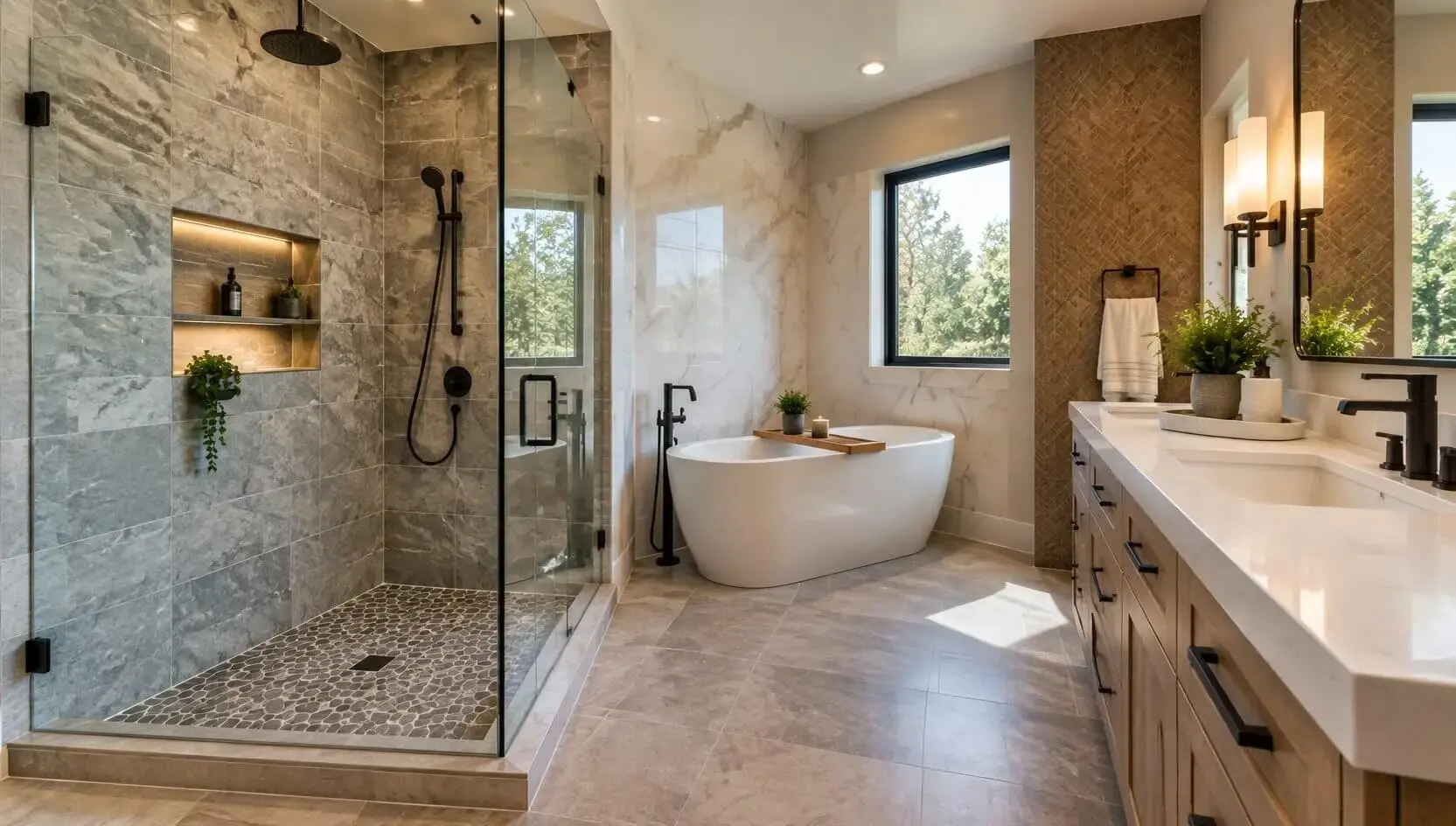
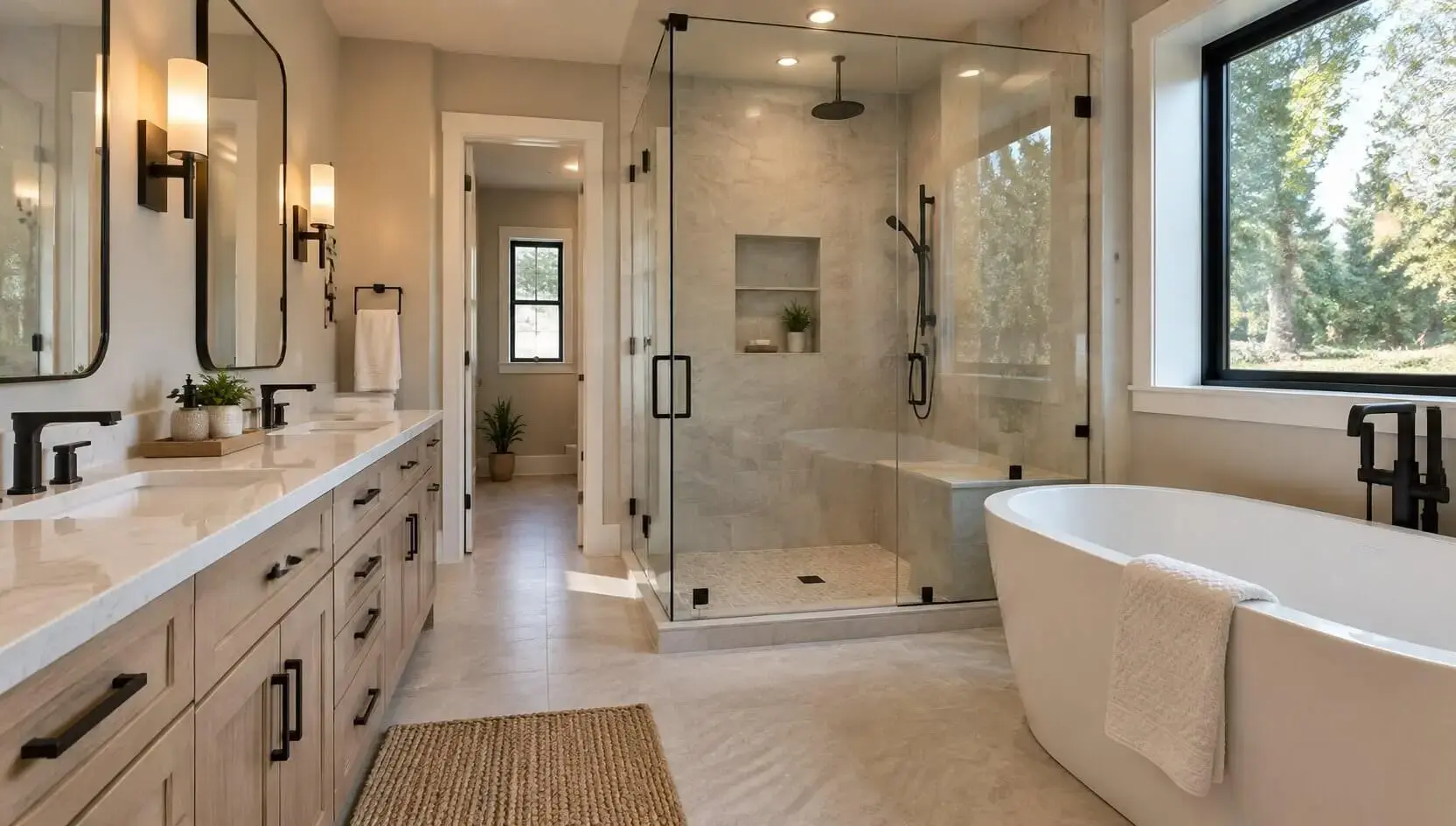
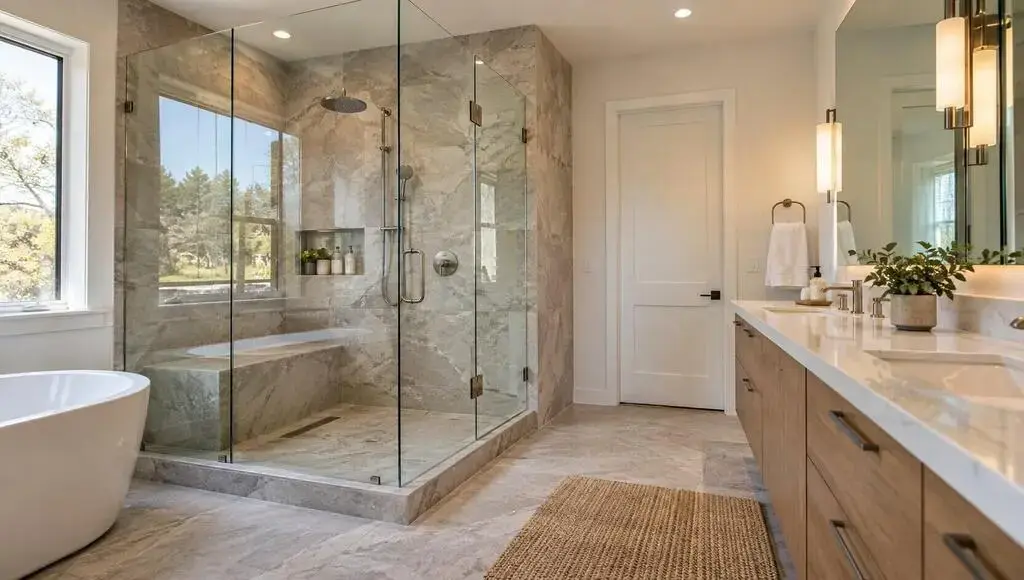
The layout of the shower matters as much as the fixtures inside it. A built-in bench is one of the most useful features you can add. It gives you a place to sit during a long steam session, makes shaving easier, and quietly supports accessibility if that becomes a priority later. A well-placed niche keeps bottles and razors off the floor, which does more for the calm of the space than most decorative choices.
A curbless walk-in layout opens the room visually and eliminates the small trip step every shower otherwise has. Paired with minimal or frameless glass, it lets the tile and stone carry the design without the shower feeling like a separate box tacked onto the room. Materials matter here too. Large-format tile keeps grout lines to a minimum, honed stone reads as spa without the glare of polished surfaces, and warm wood accents outside the wet zone soften the room without creating maintenance headaches.
The Planning Realities That Make or Break the Result
Spa features only feel like a spa when the systems behind them are set up to support them. Water heater capacity is the most common failure point. A tank that handles a standard shower comfortably may not keep up with a rainfall head plus body sprays running together, and a cold shower ends the spa experience faster than anything else. Sizing the heater to the shower design, or moving to a tankless setup where it makes sense, is part of the actual project.
Plumbing supply lines, drain size, and waterproofing behind the tile matter just as much. Multi-head setups need supply lines sized to deliver real pressure to each outlet at the same time, and steam or heavy-flow showers need a larger drain so water clears fast enough to prevent standing water. Ventilation is another one homeowners underestimate. A steam shower or a shower running hot for long sessions puts a lot of moisture into the room, and an undersized exhaust fan turns that moisture into mold on ceilings and grout.
A short checklist worth running through before committing to spa upgrades:
- Is the water heater large enough or fast enough to feed the planned fixtures
- Are the supply lines sized for multi-head or body spray pressure
- Is the drain rated for the total flow when everything runs at once
- Is the enclosure waterproofed correctly for the moisture load
- Is the exhaust fan properly sized for the room and how it will be used
- Is the electrical panel set up for a steam generator, heated flooring, or smart controls
- Do the walls have the framing needed for a bench, grab bars, or wall-mounted fixtures
Older homes often need updates to the underlying systems before the spa features go in. Skipping that step is the fastest way to end up with expensive fixtures that never feel the way they should.
Which Spa Shower Upgrades Deliver the Most and Which Often Disappoint
Not every popular spa feature earns its cost, and a few of the quieter upgrades punch far above their weight. Sorting the two categories out early helps you spend the budget where it actually shows up in daily use.
Upgrades that consistently deliver:
- Thermostatic mixing valves for constant water temperature
- A properly sized rainfall head paired with plumbing that supports it
- A handheld on a slide bar for flexibility and long-term accessibility
- Steam, when the enclosure is genuinely built for it
- Layered bathroom lighting with dimmers
- A curbless walk-in layout with minimal glass
- A built-in bench sized for real use
- Heated flooring in colder climates
Upgrades that often disappoint:
- Body sprays added to undersized plumbing or a small water heater
- Cheap add-on chromotherapy modules that feel gimmicky rather than calming
- Bluetooth showerheads used as the only “smart” feature in a plain bathroom
- Rainfall heads installed on weak household water pressure
- Aromatherapy systems that are inconvenient to refill and end up unused
The difference between a spa feel and a disappointment usually comes down to planning, not budget. A modest shower designed around the right handful of features almost always beats a bigger one packed with mismatched extras.
Frequently Asked Questions
1. What is the most affordable way to give a shower a spa feel?
A. The highest-impact low-cost changes are usually a thermostatic mixing valve, a better rainfall or dual-function shower head, a handheld on a slide bar, and layered lighting with a dimmer on the main fixture. Adding softer materials outside the wet zone, like a warmer paint color or a good bath mat, carries more weight than most fixture upgrades. A full spa build usually needs a bigger project, but the atmosphere upgrades alone go further than people expect.
2. Do rainfall shower heads really have weaker water pressure?
A. The coverage feels softer than a focused head because the water spreads over a wider area, but a properly sized rainfall head on supply lines that can deliver real pressure gives a strong, drenching experience. Weak pressure is almost always a plumbing issue, not a head issue. If the household supply is undersized or the head is too large for the available flow, no rainfall fixture will feel the way it should.
3. Can you add spa features to an existing shower without a full remodel?
A. Some upgrades slot in without opening walls. New showerheads, a handheld on a slide bar, a thermostatic valve behind an accessible trim plate, better lighting, and aromatherapy diffusers are all realistic without a rebuild. Steam showers, body sprays, curbless conversions, and built-in benches almost always require opening walls and reworking plumbing, so they belong in a proper shower or bathroom remodel rather than a weekend project.
4. How much space do you need for a spa style shower?
A. There is no single minimum, but comfort matters more than square footage. A well-designed compact walk-in with a bench, good lighting, and steady water can feel more spa-like than a poorly planned large shower. Steam and body-spray setups have realistic space and volume requirements a remodeler can size for the room, and layout choices like curbless entry can make a small footprint feel much larger.
5. How do you keep a spa shower feeling clean and low maintenance?
A. Squeegeeing the glass after each shower is the single biggest habit that keeps a spa shower looking new. Sealing natural stone on the recommended schedule, running the exhaust fan long enough after each shower to clear moisture, and periodically cleaning body-spray nozzles and rainfall head faces to prevent mineral buildup handles most of the rest. Material choices during the remodel matter too, since large-format tile, quality grout, and coated glass all cut daily maintenance.
Planning a Shower That Actually Feels Like a Spa
A shower that actually feels like a spa is not the one with the longest feature list. It is the one where the water pressure, temperature, warmth, light, and layout all support each other, and where the underlying plumbing, electrical, and ventilation are set up to carry it. Get those right and even a modest walk-in can feel like a retreat. Miss them and the fixtures will let you down no matter how much you spent on them.
If you are planning upgrades and not sure how far your current bathroom can actually go, a conversation with an experienced bathroom remodeler about layout, water heater and plumbing capacity, ventilation, and where the biggest wins sit for your specific space usually clears up the plan faster than more browsing. A short walkthrough of what you have and what you want to feel usually points to the two or three upgrades that will do most of the work.

- 6 Bathroom Tile Materials Ranked for Wet Areas - September 30, 2026
- 8 Bathroom Remodel Mistakes That Waste Money and Where to Put It Instead - September 30, 2026
- Are Walk-In Tubs Still Worth Choosing for a Bathroom Remodel - September 30, 2026