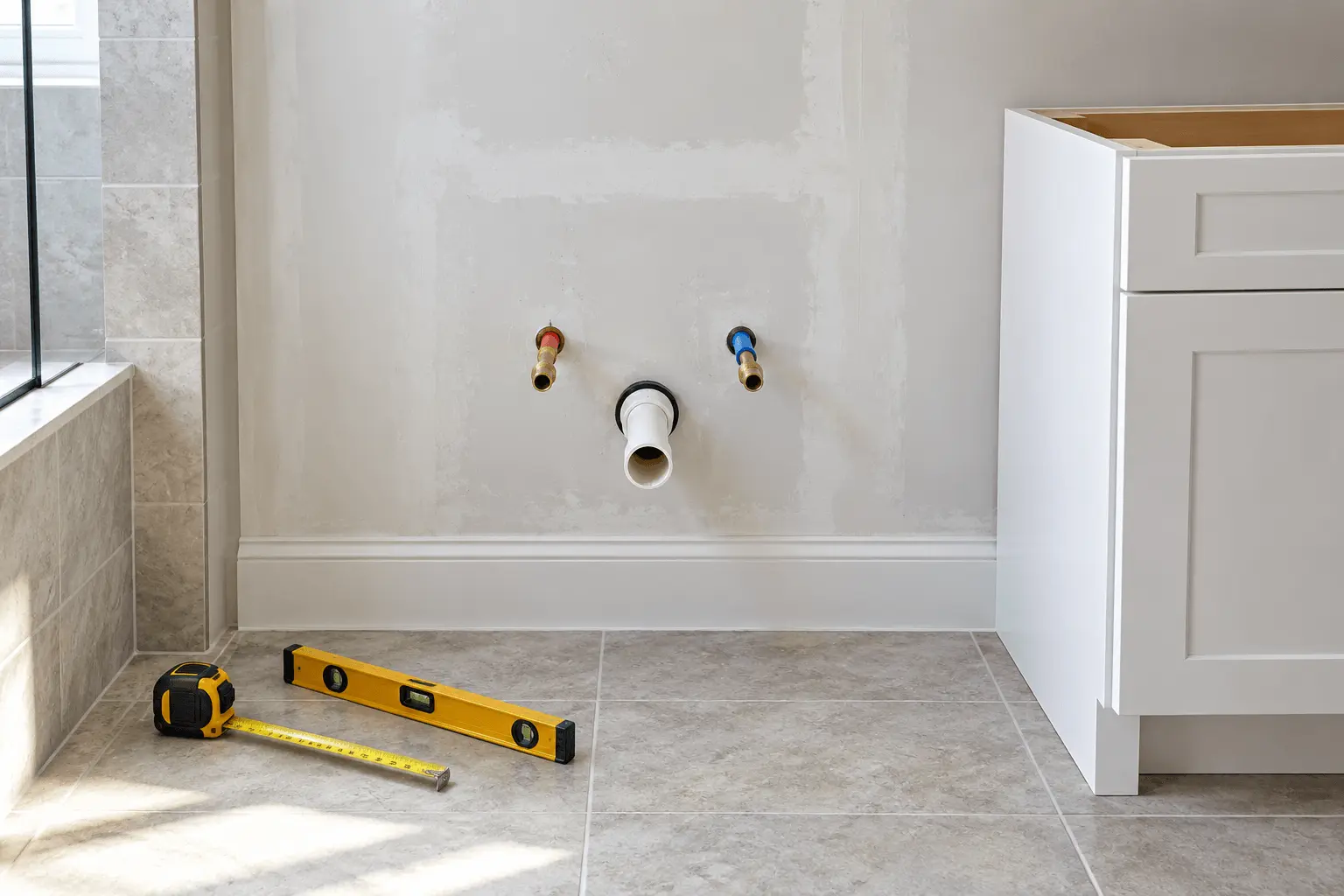
A toilet can look like the right replacement and still fail to fit the existing plumbing. Checking the toilet rough-in dimensions first helps you compare suitable models before ordering or starting a bathroom remodel.
The rough-in is the distance between the finished wall behind the toilet and the center of the floor flange, where the toilet connects to the drain. It affects how the toilet sits in the room and whether its outlet lines up with the existing plumbing.
At Payless Bath Makeover, homeowners can plan bathroom updates around the room’s existing fixtures and layout. Here’s how to measure the rough-in and use that measurement when choosing a toilet.
What Is a Toilet Rough-In Measurement?
A toilet rough-in measurement describes the plumbing location for a floor-mounted toilet. Manufacturers commonly offer toilets for 10-inch, 12-inch, and 14-inch rough-ins. A 12-inch rough-in is the most common, but the right fit depends on the measurement in your bathroom and the specifications of the toilet you’re considering.
The measurement is taken from the finished wall, not the baseboard, to the center of the floor bolts or flange. If you measure from the baseboard instead, the result can be inaccurate because the baseboard projects beyond the wall. Kohler’s toilet buying guide also advises measuring from the wall rather than the baseboard.
How to Measure Toilet Rough-In Dimensions
If the existing toilet is still installed, you can estimate the rough-in before removing it:
- Find the center of one of the floor bolts that holds the toilet in place.
- Measure straight back to the finished wall behind the toilet.
- If there is a baseboard, measure to the wall itself or account for the baseboard’s thickness.
- Record the measurement and compare it with the specifications for the replacement toilet.
If the toilet has already been removed, locate the floor flange. Measure from the finished wall to the center of the flange or the centerline between the mounting bolts. Keep the tape measure straight and take care not to measure to the outer edge of the flange.
For a remodel involving new flooring or wall finishes, measure from the finished surfaces when possible. The final wall or floor finish can change the available clearance, so confirm the measurement against the manufacturer’s installation instructions before purchasing.
Compare Common Rough-In Sizes
A 12-inch rough-in is common, but it is not universal. Ten-inch and 14-inch models are also available for bathrooms with different plumbing locations.
When comparing toilets, use the rough-in listed in the product specifications. A model designed for a 12-inch rough-in may not fit your bathroom as intended if the existing measurement is different. Do not rely on appearance or the toilet’s overall depth to determine compatibility.
Also check how much space the tank needs behind it. Some toilets sit close to the wall, while others require additional clearance. The manufacturer’s installation sheet should show the dimensions for that specific model. For example, toilet installation instructions can specify the required rough-in and clearance around the outlet.
Check Clearance Beyond the Rough-In
The rough-in is only one part of the fit. Before choosing a replacement, check:
- The toilet’s overall depth and width.
- Space between the toilet and nearby walls, vanity, or shower.
- Door and drawer swings that could interfere with use.
- The location of the water supply line.
- Whether the model’s installation instructions match the bathroom’s layout.
The exact space needed can depend on the toilet model and applicable local requirements. If the bathroom is tight or the measurements are uncertain, have the layout checked before ordering. For more on choosing between toilet configurations, see Payless Bath Makeover’s guide to one-piece and two-piece toilets.
What If Your Toilet Rough-In Does Not Match?
If your rough-in does not match the model you planned to buy, look for a toilet specifically designed for that measurement. Do not assume that forcing a different model into place will solve the problem; it may leave poor clearance or create installation complications.
If you are changing the toilet’s location as part of a larger update, plumbing adjustments may be needed. Payless Bath Makeover explains some considerations in its guide on whether you can move a toilet in a bathroom. Any relocation should be evaluated for the plumbing work and project requirements involved.
If new flooring is also planned, coordinate the installation order. This guide on installing a toilet before or after flooring can help you understand why the sequence matters.
Confirm the Fit Before Your Bathroom Remodel
Measure from the finished wall to the center of the floor flange or mounting bolts, note the result, and compare it with the replacement toilet’s installation specifications. Check the surrounding clearances and the water supply location as well.
A few careful checks can help prevent ordering a toilet that does not suit the existing plumbing. For help planning a bathroom update, contact Payless Bath Makeover to discuss your space and project.
Frequently Asked Questions
What is the standard toilet rough-in size?
A 12-inch rough-in is the most common, but 10-inch and 14-inch options are also available. Measure your bathroom and check the product specifications before selecting a model.
How do I measure toilet rough-in dimensions?
Measure from the finished wall behind the toilet to the center of the floor flange or mounting bolts. Measure to the wall, not the outer face of the baseboard.
Can I replace a 12-inch rough-in toilet with a 10-inch model?
It depends on the toilet’s installation requirements and the room’s measurements. Compare the manufacturer’s rough-in specifications and required clearances before buying.
Do I measure from the wall or the baseboard?
Measure from the finished wall. A baseboard projects from the wall and can make the measurement inaccurate if you use its front edge.
What should I do if my rough-in measurement falls between sizes?
Recheck the measurement from the finished wall to the center of the flange or mounting bolts. Then compare it with the installation sheet for the toilet you are considering; ask a qualified professional to verify the fit if needed.

- Get Bathroom Vanity Plumbing Ready Before Installation - October 28, 2026
- Choose a Long Spout Reach Bathroom Faucet That Fits - October 26, 2026
- Measure Toilet Rough-In Dimensions Before You Buy - October 23, 2026