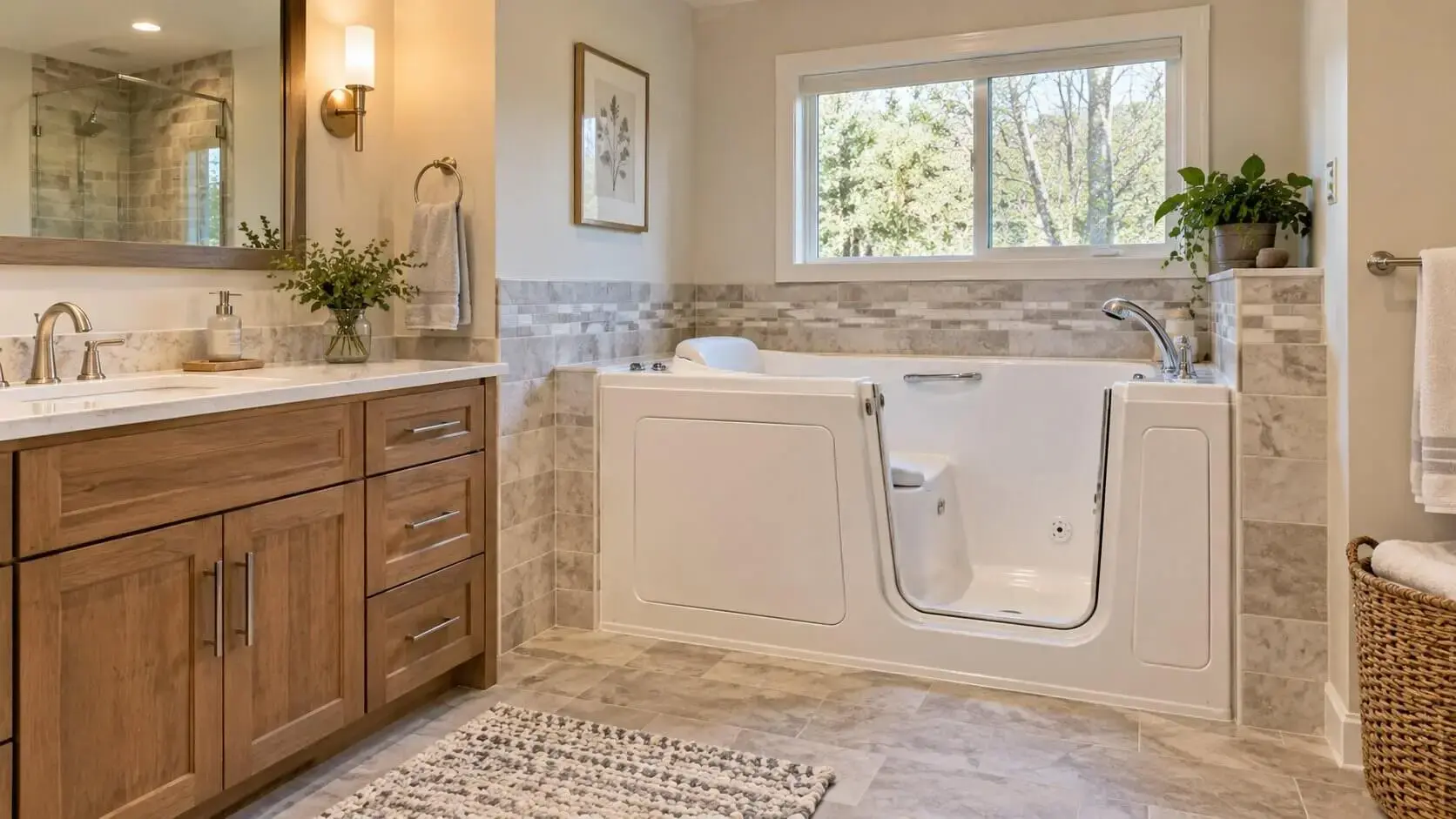
Reconfiguring your bathroom layout can completely transform how the space looks and functions. Whether you want to open up a cramped floor plan or make room for a luxurious soaking tub, you might find yourself asking: can you move a toilet in a bathroom?
The short answer is yes, but it is rarely as simple as sliding an appliance to a new corner. Moving a toilet involves altering the hidden infrastructure beneath your floor. Understanding what goes into relocating your plumbing helps you decide whether a new layout is worth the investment.
Can You Move a Toilet in a Bathroom? The Short Answer
Feasibility: When and Why It’s Possible
Almost any toilet can be relocated if you have the budget, time, and access required for the project. Plumbers move toilets every day during major bathroom renovations to improve traffic flow, update outdated layouts, or make rooms more accessible.
However, feasibility depends heavily on what lies beneath your finished flooring. Accessing the structural framing or foundation is essential to rerouting the necessary drainage lines. If your home allows physical access to these components, moving your toilet is entirely achievable.
How Hard Is It to Move a Toilet During a Remodel?
The difficulty of moving a toilet ranges from a straightforward weekend project to a complex structural engineering effort. If your bathroom sits over an open basement or crawlspace, adjusting the plumbing is relatively straightforward.
On the other hand, if the bathroom is built on a solid concrete slab or upper-story floor, how hard it is to move a toilet increases significantly. These scenarios require specialized tools, structural considerations, and considerably more labor.
Key Factors That Determine Project Complexity
Several variables influence how smooth or complicated your project will be:
- Subfloor Access: Open access from below makes pipe adjustments significantly easier.
- Foundation Type: Concrete slabs require heavy demolition compared to wood frame subfloors.
- Distance of the Move: Shorter moves often allow you to stay within existing floor joist bays.
- Joist Direction: Running pipes parallel to joists is much simpler than cutting perpendicular paths.
- Venting Access: Maintaining proper airflow prevents drain clogs and vacuum locks.
Understanding Bathroom Plumbing and Waste Pipe Relocation
How Toilet Plumbing Works (Drain, Waste, and Venting Systems)
To understand moving toilet plumbing, you must first understand how the system functions. Unlike sink or shower drains, a toilet requires a large 3-inch or 4-inch waste line that relies strictly on gravity to carry waste to your home’s main soil stack.
Additionally, the system requires proper venting to equalize pressure and pull fresh air into the pipes. A vertical vent pipe typically extends up through the roof to release gases and balance air pressure. Without adequate venting, wastewater slows down, creating sewer gas backups and persistent clogs.
Challenges of Toilet Waste Pipe Relocation (Slab vs. Subfloor)
The structural foundation of your home dictates the intensity of toilet waste pipe relocation. Working with a wood subfloor allows plumbers to cut, drill, and suspend new pipes between floor joists with minimal structural disruption.
When dealing with a concrete slab, the process involves jackhammering through solid concrete, digging a trench, laying new pipe at a precise slope, and repouring concrete. This adds considerable labor, mess, and expense to the project compared to wood subfloors.
Distance Matters: Cost to Move a Toilet 2 Feet vs. Across the Room
Distance plays a major role in both complexity and cost. When considering the cost to move a toilet 2 feet, you might get lucky if the new position remains within the same floor joist bay. In this best-case scenario, minor pipe adjustments and an offset flange might suffice.
Moving a toilet across the room, however, requires running brand-new waste lines, installing extended supply pipes, and tying into distant vent lines. Long distances demand more materials, precise slope calculations, and extensive subfloor modifications.
Breaking Down the Toilet Relocation Cost
Upfront Plumbing and Contractor Expenses
Labor accounts for the largest share of your total toilet relocation cost. Hiring a licensed plumber to reroute supply lines, reset waste pipes, and update vents typically costs between $450 and $1,800 for the plumbing work alone.
If the project requires structural framing, concrete trenching, or subfloor repair, you will also need to hire a general contractor. Contractor fees can add another $500 to $2,000 depending on the overall scope of work.
Material Costs (Pipes, Flanges, Subflooring, and Drywall)
While labor dominates the budget, material costs can steadily add up during a bathroom layout change:
- PVC or ABS Drain Pipes & Fittings: $50 – $150
- Toilet Flange & Wax/Rubber Ring: $15 – $40
- PEX or Copper Water Supply Lines: $30 – $75
- Plywood Subfloor & Drywall Patches: $75 – $200
- New Toilet (Optional): $150 – $700+
Hidden Costs: Flooring Repairs, Wall Access, and Permits
Homeowners often forget that moving a toilet damages surrounding surfaces. Once the old toilet is removed, you are left with a hole in the floor and an unpainted wall, bare space that requires repair.
Tile and flooring patchwork often adds $300 to $1,200 to your budget depending on the materials used. Additionally, wall and ceiling drywall repairs generally cost between $200 and $600, while local plumbing permits typically add another $50 to $250.
Limited-Time Offer
Upgrade Your Bathroom for Less!
- ✓
Family-owned in L.A. since 1985 - ✓
$0 Down Payment / 0% Interest for 1 Year - ✓
Long-Term Financing Starting at 9.99%
📞Call Us Today: (888) 389-9955
Step-by-Step Considerations for Moving a Toilet Plumbing System
Assessing Your Home’s Foundation and Joist Direction
Before tearing up your bathroom, inspect the structural direction of your floor joists. Waste pipes require a continuous downward slope of roughly 1/4 inch per foot to drain properly under gravity.
If your proposed toilet move requires cutting across wooden joists, you cannot simply notch out large holes without compromising your floor’s structural integrity. You may need to engineer alternative routing or reinforce joists with sistering techniques.
Rerouting Water Supply Lines and Drain Lines
Once the waste pathway is clear, the physical pipe installation begins. The main waste line must be set to the precise slope and aligned correctly with the new toilet flange placement.
Simultaneously, the small 1/2-inch water supply line must be extended to the new location. Running flexible PEX tubing through walls is relatively easy, but the line must still be anchored securely to avoid pipe vibration when the water turns on and off.
Venting Requirements and Code Compliance
Every toilet needs to be properly vented to maintain safe pressure levels and prevent sewer gases from entering your home. Building codes strictly regulate how far a toilet drain can be located from its primary vent stack.
For example, a standard 3-inch waste line typically has a maximum unvented distance of around 6 feet, while a 4-inch waste line may extend up to 10 feet. If your new toilet location exceeds these distance thresholds, your plumber must install an auxiliary vent line through the wall and connect it to your home’s main vent stack.
Alternatives to Traditional Toilet Relocation
Wall-Mounted Toilets vs. Floor-Mounted Toilets
If traditional waste pipe relocation proves too invasive, alternative fixtures can provide design flexibility. Wall-mounted toilets feature an in-wall tank carrier system that elevates the bowl off the floor.
While wall-hung options still require proper drainage access inside the wall cavity, they free up visible floor space and create a modern look without requiring deep floor trenching in certain layouts.
Macerating and Rear-Discharge Toilet Options
For tough installations, especially on concrete slabs, macerating toilet systems offer a practical alternative. Standard toilets require a large 3- to 4-inch floor drain relying entirely on gravity slope.
In contrast, macerating systems grind up waste and pump it horizontally or vertically through small 3/4-inch to 1-inch pipes directly into your main stack. Because macerating systems do not require breaking up concrete or cutting heavy joists, they offer an efficient way to install or move a toilet in basements and tight spaces.
Optimizing Your Bathroom Layout Change Without Moving Plumbing
Before committing thousands of dollars to shifting pipes, re-evaluate your layout goals. You can often achieve a fresh feel through cosmetic and space-saving updates without moving core plumbing fixtures.
Consider installing a compact vanity, choosing a sliding barn-style door, or replacing a bulky tub with a sleek walk-in shower. These targeted changes can dramatically open up your bathroom while leaving the toilet firmly in its original spot.
DIY vs. Hiring a Professional Plumber
When Can You DIY a Toilet Move?
Moving a toilet is generally not recommended as a beginner DIY project. However, experienced homeowners with advanced plumbing skills might handle a small relocation under specific conditions:
- Open basement or crawlspace access directly under the bathroom.
- Wooden floor joists running parallel to the proposed pipe path.
- Shorter moves (under 2 feet) that do not require installing brand-new vent lines.
Why Professional Installation Is Recommended for Plumbing Relocation
For complex layout changes, hiring a licensed plumber is the safest path. Improperly pitched waste lines cause frequent clogs, while leaky flanges and unvented pipes lead to hidden water damage, mold growth, and unpleasant sewer odors. Professional plumbers bring master-level knowledge of local building codes, specialized pipe-fitting tools, and insurance protection to safeguard your home against costly mistakes.
Questions to Ask Your Contractor Before Starting
Before signing a contract, ask these essential questions to ensure your project stays on schedule and within budget:
- Does this quote cover floor demolition, subfloor repair, and patching, or only the plumbing work?
- Will we need to add or extend venting lines for this new location?
- Are plumbing permits required by our local municipality for this layout change?
- How do you plan to navigate the floor joists or concrete slab?
- What is the contingency plan if we encounter unexpected structural or plumbing issues?
FAQs
How hard is it to move a toilet a few inches?
Moving a toilet just a few inches is relatively simple if you use an offset toilet flange, which allows up to 2 inches of movement in any direction without altering the main drain line below. However, if you need to move it more than 2 inches, you will still need to cut into the subfloor and adjust the waste pipe beneath.
How much does the average toilet relocation cost?
On average, relocating a toilet costs between $800 and $3,000. Simple moves over open basement subfloors fall on the lower end of the spectrum, while moving a toilet across a concrete slab or upper-floor space can easily push total costs upward of $4,000 when factoring in flooring and drywall repairs.
Can you move a toilet on a concrete slab foundation?
Yes, you can move a toilet on a concrete slab, but it requires significantly more labor and budget. Contractors must use a jackhammer to break open the concrete slab, dig a trench to route the new waste and water lines at the proper slope, and then pour fresh concrete before reinstalling the subfloor and finished flooring.
Do I need a permit to move a toilet in my bathroom?
In most jurisdictions, moving a toilet requires a plumbing permit because it involves altering the drainage, waste, and venting infrastructure of your home. Minor cosmetic updates do not require permits, but relocating primary waste lines almost always triggers local building code inspections.
How long does it take to move toilet plumbing during a renovation?
The physical plumbing work for moving a toilet typically takes 1 to 2 days for standard wood subfloors. However, if your project involves jackhammering concrete slabs, structural modifications, framing, and tile repairs, the full process can take 3 to 5 days of active labor spread over your overall remodel timeline.
Conclusion
So, can you move a toilet in a bathroom? Absolutely. With proper planning, skilled labor, and a realistic budget, you can relocate your toilet to create a more functional and stylish space.
By carefully evaluating your foundation type, structural framing, and local code requirements, you can determine whether moving your plumbing fits your overall project goals. Consult with a licensed plumbing contractor early in your planning process to turn your dream bathroom layout into a practical reality.

- 6 Bathroom Tile Materials Ranked for Wet Areas - September 30, 2026
- 8 Bathroom Remodel Mistakes That Waste Money and Where to Put It Instead - September 30, 2026
- Are Walk-In Tubs Still Worth Choosing for a Bathroom Remodel - September 30, 2026