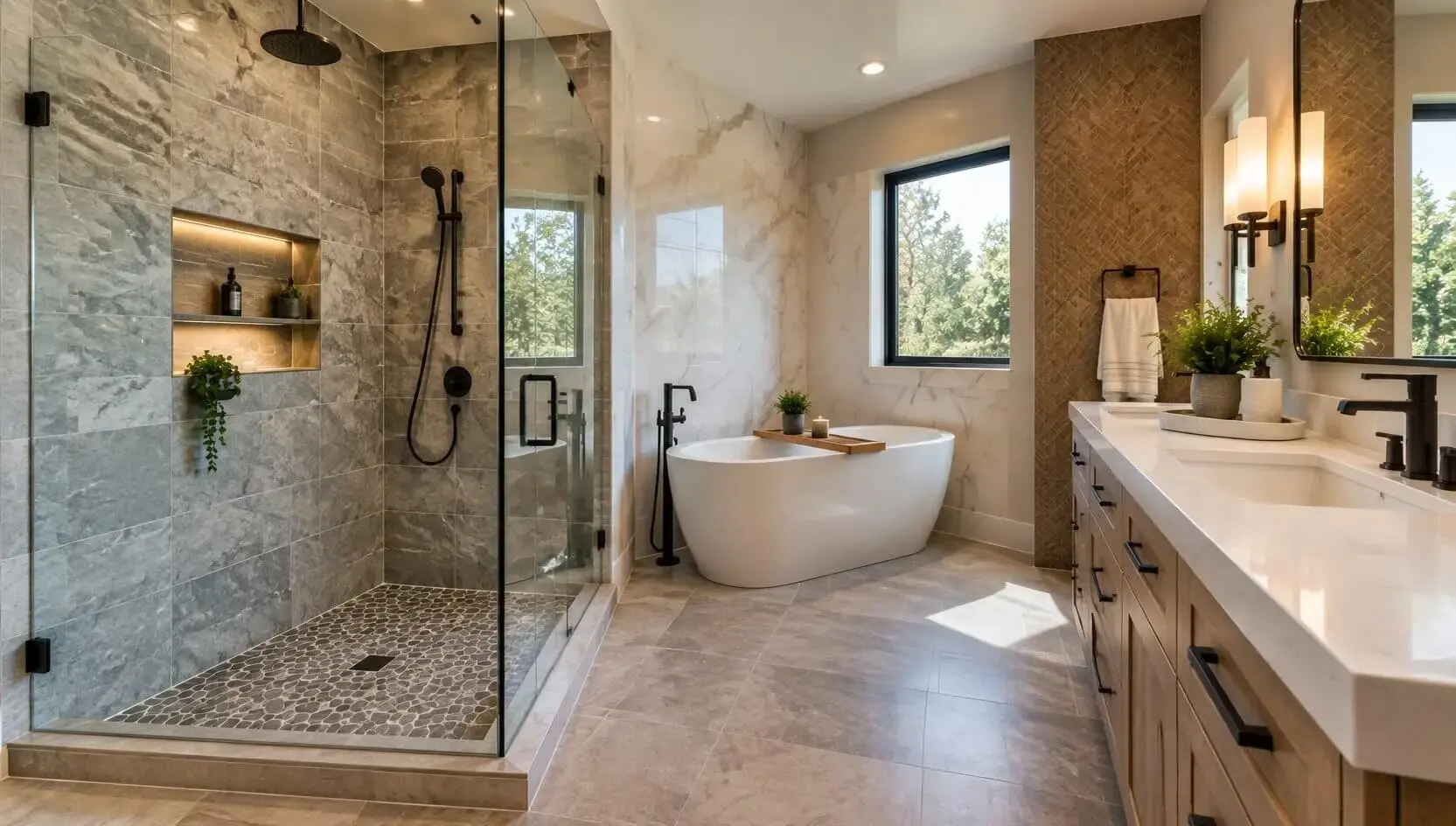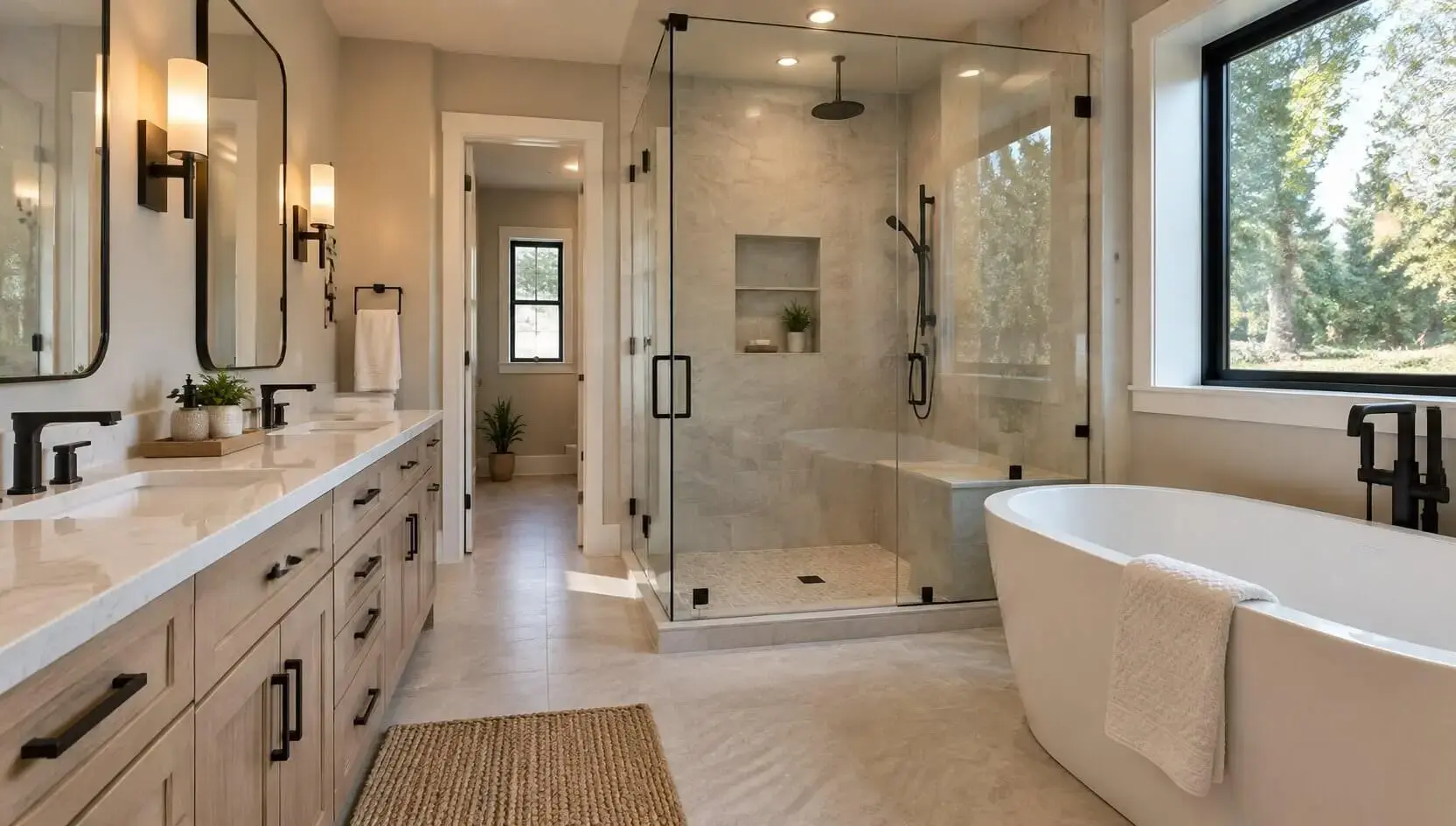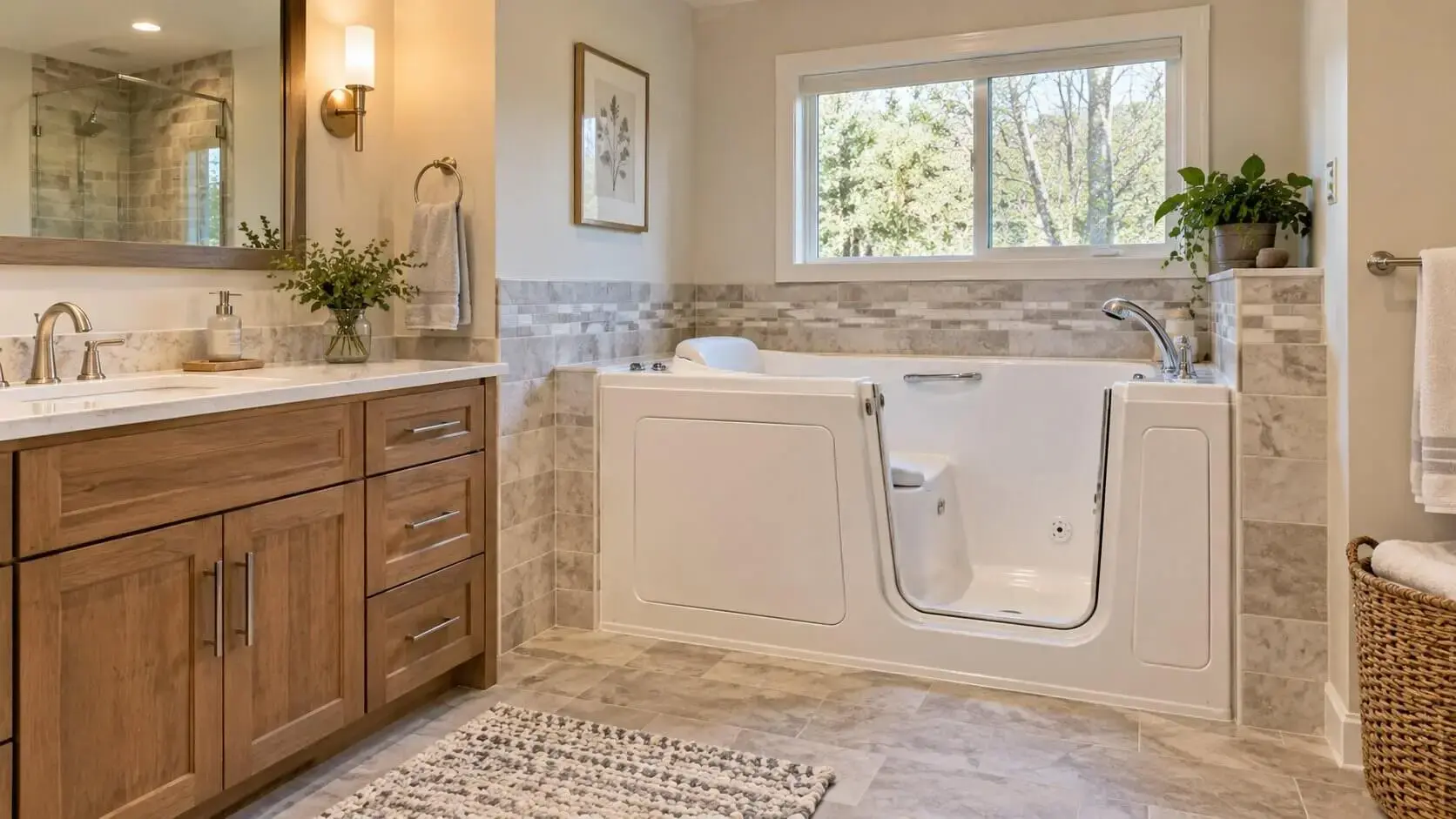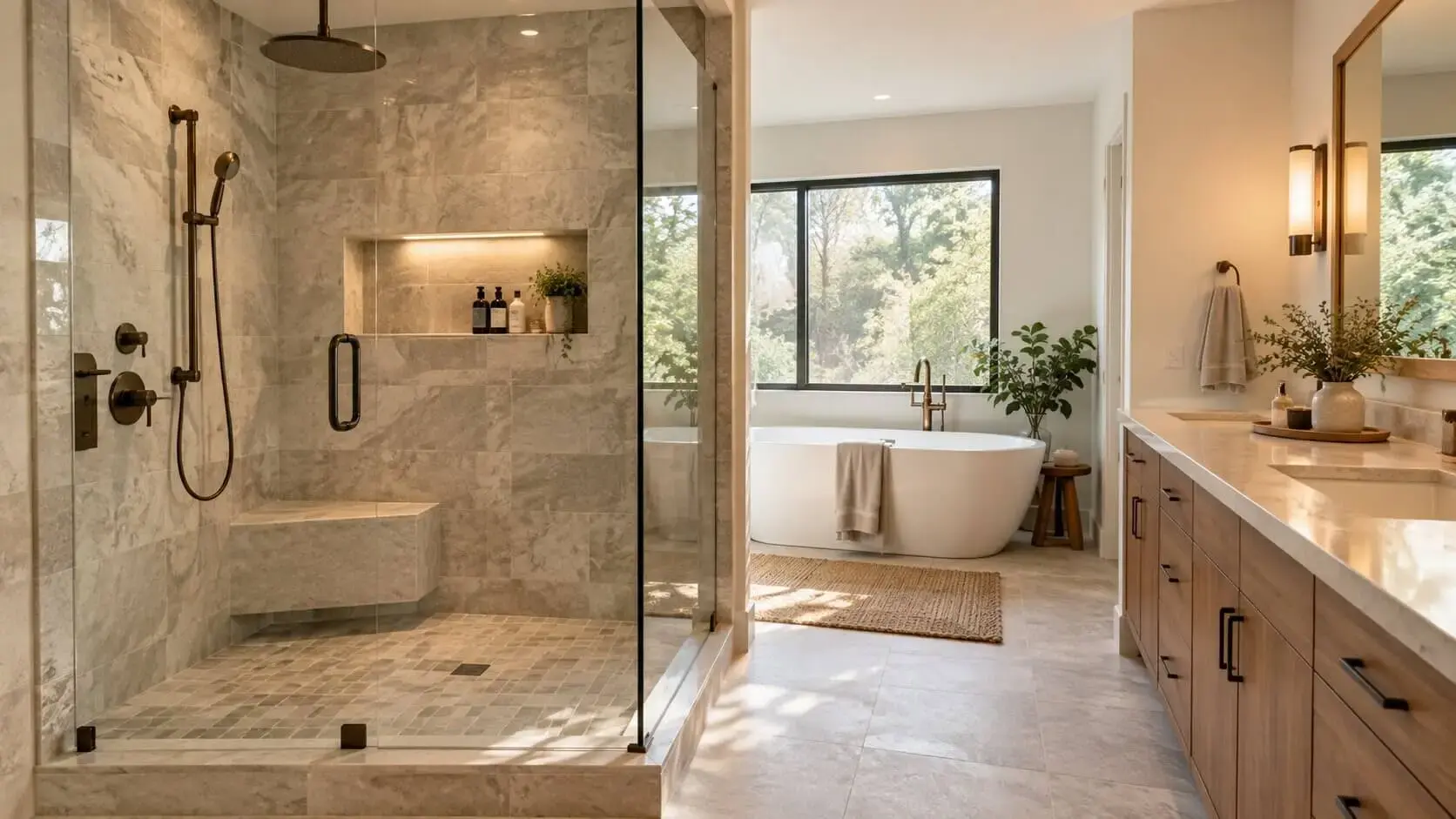
Aging in place bathroom design focuses on creating a safe, comfortable, and easy-to-use bathroom that supports long-term independence. It reduces fall risks, improves accessibility, and ensures the space remains functional as needs change over time. The goal is to blend safety features with a clean, modern design that still feels like a normal home bathroom.
Key Principles of Aging In Place Bathroom Design
Aging in place bathroom design is built on a few core ideas: safety, accessibility, and simplicity. Every element should make movement easier and reduce the chance of accidents, especially in wet areas like showers and floors.
What Makes a Bathroom Aging In Place Friendly
A bathroom becomes aging-in-place-friendly when it removes unnecessary barriers and supports safe movement. This includes step-free access, stable walking surfaces, and easy-to-reach fixtures. It also ensures enough space for turning, sitting, and standing comfortably without strain.
Balancing Style and Accessibility
Modern aging-in-place bathroom remodeling focuses on blending function with style. Safety features no longer need to look clinical. Instead, they can be integrated into elegant designs using modern finishes, warm lighting, and coordinated materials that match the overall bathroom theme.
Essential Accessible Bathroom Design Ideas
Accessible design helps improve movement and reduces physical effort in daily use. These upgrades are especially helpful for long-term comfort and independence.
Walk-In Showers and Barrier-Free Entry
Walk-in showers are one of the most important features in accessible bathrooms. A barrier-free entry removes the need to step over a tub or high ledge, reducing fall risks. These showers are also easier to clean and maintain.
Wider Doorways and Open Layouts
Wider doorways improve accessibility for mobility aids and make the space feel less confined. Open layouts also improve movement inside the bathroom.
- Easier access for walkers or wheelchairs
- Better airflow and visibility
- Reduced tight corners and obstacles
- Improved long-term usability
Non-Slip Flooring Options
Non-slip flooring is essential for safety in wet environments. Textured tiles, vinyl, or treated stone help reduce slipping risks while still maintaining a modern look.
- Slip-resistant ceramic or porcelain tiles
- Textured vinyl flooring
- Matte-finish natural stone
- Easy-to-clean waterproof surfaces
Bathroom Safety Features for Seniors
Safety features play a major role in reducing accidents and supporting independence. These additions are simple but highly effective in daily use.
Grab Bars and Support Fixtures
Grab bars provide stability near toilets, showers, and tubs. They help users maintain balance while moving or standing.
- Installed near shower entry points
- Positioned beside toilets for support
- Available in modern finishes like brushed nickel or matte black
- Can double as towel bars in some designs
Shower Seating Options
Shower seating improves comfort and reduces fatigue. It also makes bathing safer for individuals with balance concerns.
- Built-in tiled benches for a seamless look
- Fold-down wall-mounted seats for flexibility
- Portable waterproof stools for smaller bathrooms
- Ideal for longer or assisted showers
Anti-Scald Water Controls
Anti-scald valves regulate water temperature and prevent sudden hot water bursts. This is an important safety upgrade for an aging-in-place bathroom design.
- Maintains consistent water temperature
- Prevents burns from sudden heat changes
- Improves overall shower safety
- Common in modern thermostatic systems
Aging In Place Bathroom Remodeling Layout Planning
A well-planned layout ensures safety features work together smoothly. It also improves comfort and movement throughout the bathroom.
Open Layout Design for Mobility
Open layouts reduce clutter and improve accessibility. They allow easier movement between key areas like the shower, toilet, and sink.
- More open floor space for mobility
- Easier navigation for assistive devices
- Better visibility across the room
- Reduced risk of collisions with fixtures
Smart Fixture Placement
Fixture placement should support natural movement patterns. Everything should be within easy reach without stretching or bending too far.
- Sink placed at comfortable height
- Toilet positioned with side clearance
- Shower controls installed at accessible level
- Clear walking paths between zones
Wet and Dry Area Planning
Separating wet and dry areas improves safety and keeps the bathroom easier to maintain.
- Shower area fully waterproofed
- Dry zones for sink and storage
- Proper drainage to prevent water buildup
- Reduced slip risks in walking areas
Limited-Time Offer
Upgrade Your Bathroom for Less!
-
✓
Family-owned in L.A. since 1985 -
✓
$0 Down Payment / 0% Interest for 1 Year -
✓
Long-Term Financing Starting at 9.99%
📞Call Us Today: (888) 389-9955
Benefits of Aging In Place Bathroom Design
Aging in place bathroom design offers long-term safety, independence, and comfort. It reduces the risk of injuries while making daily routines easier. It also increases home value because accessible features are increasingly in demand. Most importantly, it allows homeowners to stay in their homes longer without major disruptions.
Planning an Aging In Place Bathroom Remodeling Project
Proper planning ensures the final design meets both current and future needs. It also helps avoid costly mistakes during remodeling.
Assessing Current Bathroom Needs
Start by reviewing what challenges exist in the current bathroom setup. This helps identify the most important upgrades.
- Slippery or unsafe flooring areas
- Tight or cramped movement spaces
- Hard-to-reach fixtures
- Poor lighting or visibility
Choosing Safe and Durable Materials
Materials should be selected for safety, durability, and easy maintenance. This ensures long-term performance.
- Water-resistant flooring materials
- Mold-resistant wall finishes
- Durable and easy-clean surfaces
- Strong, long-lasting fixtures
Working With Remodeling Professionals
Professional remodeling services help ensure proper installation of safety features and layout improvements. Experts also help optimize design for both function and comfort.
Common Mistakes to Avoid in Aging In Place Bathroom Design
One common mistake is ignoring future mobility needs and focusing only on current comfort. Another is overcrowding the bathroom with too many fixtures, which reduces usable space. Poor lighting is also often overlooked, even though it is essential for safety. Finally, skipping professional input can lead to layout or installation issues that affect long-term usability.
FAQs
1. What is an aging-in-place bathroom design?
A. Aging in place bathroom design is a planning approach that creates a safe and accessible bathroom for long-term independence and comfort.
2. What are the best accessible bathroom design ideas?
A. Some of the best ideas include walk-in showers, non-slip flooring, wider doorways, and easy-to-reach fixtures that improve mobility and safety.
3. What bathroom safety features are most important for seniors?
A. Grab bars, shower seating, and anti-scald water controls are among the most important features for preventing accidents.
4. Can small bathrooms be designed for aging in place?
A. Yes, small bathrooms can be redesigned with compact layouts, smart storage, and space-saving fixtures while still improving accessibility.
5. Is aging-in-place bathroom remodeling expensive?
A. Costs depend on materials and scope, but many improvements can be done in phases to fit different budgets.
Conclusion
Aging-in-place bathroom design creates a safer and more comfortable environment for long-term living. With thoughtful planning, the right layout, and essential safety features, homeowners can significantly improve both independence and daily convenience. Professional guidance can also help ensure the remodel is practical, durable, and well-suited for future needs.

- 6 Bathroom Tile Materials Ranked for Wet Areas - September 30, 2026
- 8 Bathroom Remodel Mistakes That Waste Money and Where to Put It Instead - September 30, 2026
- Are Walk-In Tubs Still Worth Choosing for a Bathroom Remodel - September 30, 2026